
Green Synthesis of Silver Nanoparticles using Curcuma xanthorrhiza as an Antibacterial Agent Against Staphylococcus aureus

Downloads
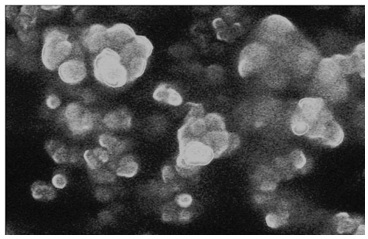
This study synthesized silver nanoparticles (Cur-AgNPs) using Curcuma xanthorrhiza rhizome extract via a green synthesis method to address the growing concern of nosocomial infections. Nosocomial infections, particularly those caused by Staphylococcus aureus, remain a significant healthcare challenge due to increasing antimicrobial resistance. The aim of this study was to evaluate the antibacterial activity of Cur-AgNPs against Staphylococcus aureus. Silver nanoparticles were synthesized using 1 mM AgNO₃ at 60°C for 24 h, followed by characterization using UV-Vis spectroscopy, Fourier Transform Infrared Spectroscopy (FTIR), and Scanning Electron Microscopy (SEM). Antibacterial activity was assessed using the disk diffusion method at concentrations of 10, 20, 40, 80, and 160 μg/mL, with Clindamycin as a positive control. The results showed that Cur-AgNPs exhibited concentration-dependent antibacterial activity, with inhibition zones ranging from 5 ± 0.25 mm to 15 ± 0.89 mm, while the positive control (Clindamycin) produced an inhibition zone of 14 ± 0.2 mm. These findings suggest that Cur-AgNPs possess promising in vitro antibacterial activity against Staphylococcus aureus. However, this study is limited to a single bacterial species and in vitro evaluation. Further studies are required, including minimum inhibitory concentration (MIC) and minimum bactericidal concentration (MBC) assays, cytotoxicity testing, nanoparticle stability analysis, and evaluation in in vivo models to confirm their potential biomedical applications.
Downloads
El-Ghali A, Kunz Coyne AJ, Caniff K, Bleick C, Rybak MJ. Sulbactam-durlobactam: A novel β-lactam-β-lactamase inhibitor combination targeting carbapenem-resistant Acinetobacter baumannii infections. Pharmacotherapy. 2023;43(6):502-513. doi:10.1002/phar.2802
Millah ZN, Triatmoko B, Nugraha AS. Isolasi Fungi Tanah Muara Desa Pasir Putih Kabupaten Situbondo serta Penapisan Aktivitas Antibakteri terhadap Staphylococcus aureus. Jurnal Ilmu Kefarmasian Indonesia. 2022;20(2):150. doi:10.35814/jifi.v20i2.1077
Djasfar SP, Pradika Y. Edukasi Bakteri Penyebab Infeksi Nosokomial Bagi Kesehatan Masyarakat Di Lingkungan Rt 02 Kelurahan Rawa Buaya. Jurnal Pengabdi Masyarakat Kesosi. 2023;6(1):61-68. doi:10.57213/abdimas.v6i1.147
Erlin E, Rahmat A, Redjeki S, Purwianingsih W. Deteksi Methicilin Resistant Staphylococcus aureus ( MRSA ) sebagai Penyebab Infeksi Nosokomial Pada Alat-Alat di Ruang Perawatan Bedah. Quagga: Jurnal Pendidik dan Biologi. 2020;12(2):137. doi:10.25134/quagga.v12i2.2671
de Oliveira JFA, Saito Â, Bido AT, Kobarg J, Stassen HK, Cardoso MB. Defeating Bacterial Resistance and Preventing Mammalian Cells Toxicity Through Rational Design of Antibiotic-Functionalized Nanoparticles. Scientific Reports. 2017;7(1). doi:10.1038/s41598-017-01209-1
Rai MK, Deshmukh SD, Ingle AP, Gade AK. Silver nanoparticles: the powerful nanoweapon against multidrug-resistant bacteria. Journal of Applied Microbiology. 2012;112(5):841-852. doi:10.1111/j.1365-2672.2012.05253.x
Gahlawat G, Shikha S, Chaddha BS, Chaudhuri SR, Mayilraj S, Choudhury AR. Microbial glycolipoprotein-capped silver nanoparticles as emerging antibacterial agents against cholera. Microbial Cell Factories. 2016;15(1). doi:10.1186/s12934-016-0422-x
Massardi A, Bahry SS, Fajri DM, et al. Sintesis nanopartikel perak dengan Punica granatum L. dan uji aktivitasnya pada Staphylococcus aureus dan Methicillin Resistant Staphylococcus aureus (MRSA). Jurnal Biologi. 2023;27(1):36. doi:10.24843/jbiounud.2023.v27.i01.p04
Fadillah I, Arumsari A. Kajian Literatur Sintesis Nanopartikel Perak Menggunakan Reduktor Kimia dan Biologi serta Uji Aktivitas Antibakteri. Jurnal Riset Farmasi. 2022;1(2):141-149. doi:10.29313/jrf.v1i2.569
Thomas A, R V, S R. Green Synthesis of Copper Nanoparticles using Green Tea and Neem Formulation and Assessment if its Antimicrobial Effects. Indian Journal of Forensic Medicine & Toxicology. 2022;16(4). doi:10.37506/ijfmt.v16i4.18550
Hembram KC, Kumar R, Kandha L, Parhi PK, Kundu CN, Bindhani BK. Therapeutic prospective of plant-induced silver nanoparticles: application as antimicrobial and anticancer agent. Artificial Cells, Nanomedicine, and Biotechnology. 2018;46(sup3):S38-S51. doi:10.1080/21691401.2018.1489262
Kim MB, Kim C, Song Y, Hwang JK. Antihyperglycemic and Anti-Inflammatory Effects of Standardized Curcuma xanthorrhiza Roxb. Extract and Its Active Compound Xanthorrhizol in High-Fat Diet-Induced Obese Mice. Evidence-Based Complementary and Alternative Medicine. 2014;2014:1-10. doi:10.1155/2014/205915
Kim S, Kook KE, Kim C, Hwang JK. Inhibitory Effects of Curcuma xanthorrhiza Supercritical Extract and Xanthorrhizol on LPS-Induced Inflammation in HGF-1 Cells and RANKL-Induced Osteoclastogenesis in RAW264.7 Cells. Journal of Microbiology and Biotechnology. 2018;28(8):1270-1281. doi:10.4014/jmb.1803.03045
Fitria R, Seno Dsh, Priosoeryanto Bp, Hartanti, Nurcholis W. Volatile compound profiles and cytotoxicity in essential oils from rhizome of Curcuma aeruginosa and Curcuma zanthorrhiza. Biodiversitas Journal of Biological Diversity. 2019;20(10). doi:10.13057/biodiv/d201024
Atun S, Aznam N, Arianingrum R, et al. Characterization of Curcuminoid from Curcuma xanthorrhiza and Its Activity Test as Antioxidant and Antibacterial. Molekul. 2020;15(2):79. doi:10.20884/1.jm.2020.15.2.540
Rukayadi Y, Hwang J. In Vitro Activity of Xanthorrhizol Isolated from the Rhizome of Javanese Turmeric (Curcuma xanthorrhiza Roxb.) Against Candida albicans Biofilms. Phytotherapy Research. 2012;27(7):1061-1066. doi:10.1002/ptr.4834
Marni M, Firdaus I, Wahyuningsih W, Soares D, Muhammad, Siska N. Literature Review: Effectiveness Of Honey, Curcuma And Turmeric For Child Health. Proceeding of International Conference on Science Health And Technology. Published online 2023:444-450. doi:10.47701/icohetech.v4i1.3424
Mohanta YK, Biswas K, Jena SK, Hashem A, Abd_Allah EF, Mohanta TK. Anti-biofilm and Antibacterial Activities of Silver Nanoparticles Synthesized by the Reducing Activity of Phytoconstituents Present in the Indian Medicinal Plants. Frontiers in Microbiology. 2020;11. doi:10.3389/fmicb.2020.01143
Javed R, Zia M, Naz S, Aisida SO, Ain N ul, Ao Q. Role of capping agents in the application of nanoparticles in biomedicine and environmental remediation: recent trends and future prospects. Journal of Nanobiotechnology. 2020;18(1). doi:10.1186/s12951-020-00704-4
Maghimaa M, Alharbi SA. Green synthesis of silver nanoparticles from Curcuma longa L. and coating on the cotton fabrics for antimicrobial applications and wound healing activity. Journal of Photochemistry and Photobiology B: Biology. 2020;204:111806. doi:10.1016/j.jphotobiol.2020.111806
Salayová A, Bedlovičová Z, Daneu N, et al. Green Synthesis of Silver Nanoparticles with Antibacterial Activity Using Various Medicinal Plant Extracts: Morphology and Antibacterial Efficacy. Nanomaterials. 2021;11(4):1005. doi:10.3390/nano11041005.
Copyright (c) 2026 Jurnal Kefarmasian Indonesia

This work is licensed under a Creative Commons Attribution-NonCommercial-ShareAlike 4.0 International License.


